
New York City
Construction Debris Removal in New York City
Demolition is roughly half taking things apart and half moving them. In New York the second half is the hard one, and we plan it before we price the first.
The route out is planned before the price
Everything our demolition work generates has to leave the building, and in this city that is the constraint that decides the schedule.
So we establish the route out before we quote. Which elevator, which hours the building releases it, which door material leaves by, where a container can legally sit and for how long, and how much can leave in a day. On a floor with four hours of shared freight, that four hours sets the pace of the whole job, and no amount of extra labour upstairs changes it.
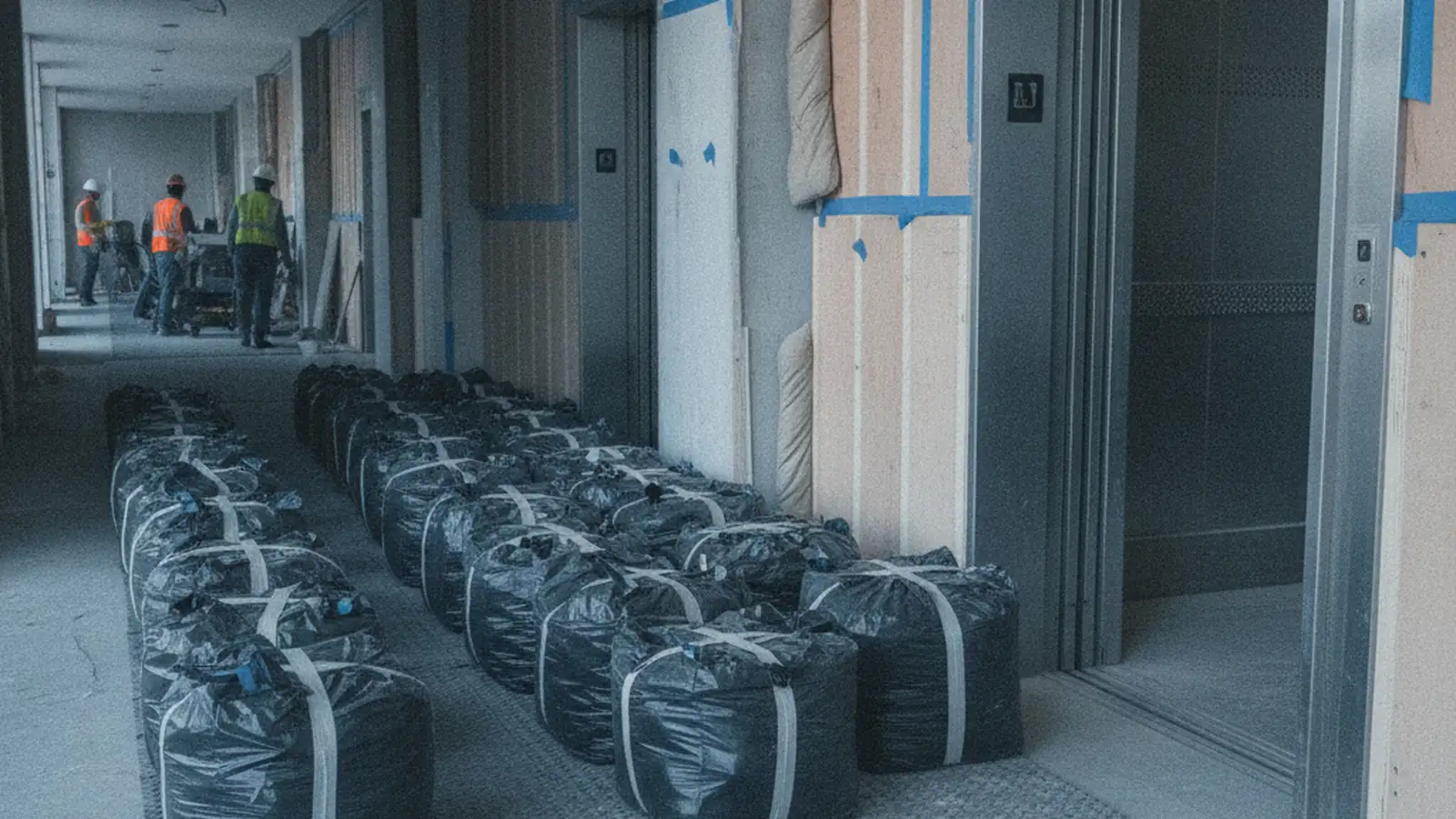
What we take out is what we took down. Walls, ceilings, floor coverings and their beds, fixtures, millwork, redundant services, cut concrete. It is broken down to what the route can carry, bagged or bundled, staged where the building agrees it can be staged, and moved on the building's schedule.

01 Inside the building
Nothing waits in a corridor overnight
Debris is staged on protected floor inside the work area, never in a shared corridor or a stair. It moves to the loading point in the windows the building gives us, and the space is left safe and swept at the end of every day.
On an occupied floor that discipline is most of what the managing agent is judging us on. A tidy corridor is remembered for about a week. A damaged one is remembered for years.
On the street
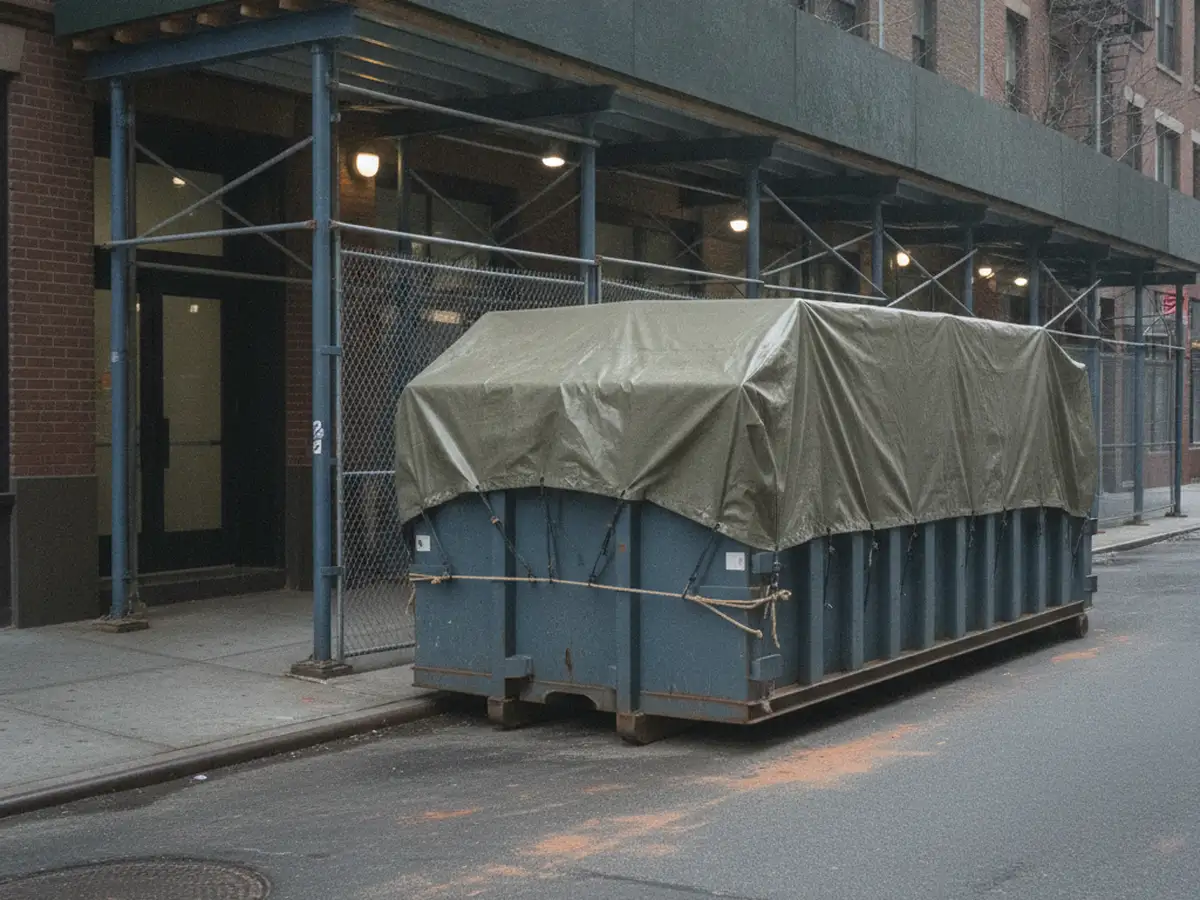
Where a container is needed, its placement is worked out before it arrives rather than on the morning. Where it can sit, for how long, how the sidewalk stays clear and protected, and what the building expects at its entrance.
Carting off site is done by a registered carting company, and we coordinate the two halves so the container is there when the material is ready and gone when it is full. A container that sits half empty on a Brooklyn street for a week is money and goodwill, and we plan against both.
On a house with a driveway the whole thing is simpler and the schedule usually reflects it.
What we hold to
Protection first
Corridors, lobbies, floors, door frames and elevator cabs get covered before anything moves through them.
Bagged and bundled
Material is broken down to what the route can carry safely, and sized to the elevator or the stair it has to use.
Daily clear-down
The work area is left safe and swept at the end of each day. Nothing is stored in a corridor or a stair overnight.
Scheduled with the building
Material moves in the windows the building releases, agreed with the managing agent before we start.
Common questions
What happens to the debris?
Clearing it is part of the job.
We break the material down, bag or bundle it, and move it out of the space on the schedule the building gives us, down to the loading point ready to go. Carting off site is done by a registered carting company, and we coordinate it so the two halves line up. Where a container is needed on the street, its placement has its own rules about where and how long it can sit, and that gets worked out before it arrives.
You get the space back swept and clear.
Where does the material go once it leaves the building?
To a licensed transfer station or disposal facility, through the registered carting company that takes it from the loading point.
What we can tell you at the estimate is how the material will be handled inside the building, when it will move, and what the building has agreed to. What we will not do is quote you a recycling percentage or a destination we cannot stand behind on the day.